What is Psoriasis?
Psoriasis is an inflammatory skin condition. There are five types, each with unique signs and symptoms. Between 10% and 30% of people who develop psoriasis get a related form of arthritis called “psoriatic arthritis,” which causes inflammation of the joints.
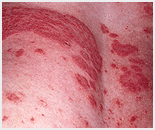
Plaque psoriasis is the most common type of psoriasis. About 80% of people who develop psoriasis have plaque psoriasis, which appears as patches of raised, reddish skin covered by silvery-white scale. These patches, or plaques, frequently form on the elbows, knees, lower back,
and scalp. However, the plaques can occur anywhere on the body.
The other types are guttate psoriasis (small, red spots on the skin),
pustular psoriasis (white pustules surrounded by red skin), inverse psoriasis (smooth, red lesions form in skin folds), and erythrodermic psoriasis (widespread redness, severe itching, and pain).
Regardless of type, psoriasis usually causes discomfort. The skin often itches, and it may crack and bleed. In severe cases, the itching and discomfort may keep a person awake at night, and the pain can make everyday tasks difficult.
Psoriasis is a chronic, meaning lifelong, condition because there is currently no cure. People often experience flares and remissions throughout their life. Controlling the signs and symptoms typically requires lifelong therapy.
Treatment depends on the severity and type of psoriasis. Some psoriasis is so mild that the person is unaware of the condition. A few develop such severe psoriasis that lesions cover most of the body and hospitalization is required. These represent the extremes. Most cases of psoriasis fall somewhere in between.
What is Psoriatic Arthritis?
Anyone who has psoriasis and joint pain may have psoriatic arthritis. The signs and symptoms of psoriatic arthritis are:

The red, inflamed skin of psoriasis.

Pain and swelling in the joints that is worse in the morning or after rest. Stiffness lessens with activity.

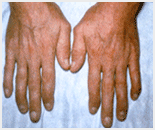
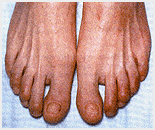
Sausage-like appearance in the affected fingers and toes (in severe cases.)

Pitting (small indentations on the nail) or the nails may be pulling away from the nail beds.

Nails may have ridges or a yellowish-orange discoloration.
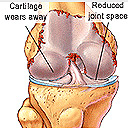
Psoriatic arthritis is a lifelong condition that causes deterioration, pain, and stiffness in the joints. Some people experience only joint problems and never develop psoriasis. About 70% of people who get psoriatic arthritis develop psoriasis first. Studies show that in these cases, psoriasis usually precedes psoriatic arthritis by about 10 years. However, a person can develop psoriatic arthritis within a few months of getting psoriasis or decades later.
Psoriatic arthritis most commonly involves the fingers and toes. Joints in the neck, back, knees, ankles, and other areas also may be affected. In addition to being painful and stiff, the involved areas usually feel hot. Affected joints tend to have a purplish discoloration.
Almost 90% of people who develop psoriatic arthritis see nail involvement first. The nails may pull away from the nail bed or develop pitting, ridges, or a yellowish-orange discoloration. Dermatologists urge their patients who have psoriasis that involves the nails to contact them if they experience any joint problems. Joint deterioration can be prevented with treatment.
Early warning signs of psoriatic arthritis include hand pain, foot pain, and "tennis elbow." These early warning signs may be overlooked if psoriasis lesions are not present. Other indications are shoulder, neck, or back pain.
Psoriatic arthritis ranges in severity. It can involve one digit or an entire hand. It can become so severe that it is disabling. According to the National Psoriasis Foundation, about 20% of patients living with psoriatic arthritis have more than five totally damaged joints, which significantly impairs their ability to perform everyday tasks and reduces their quality of life.